
Guide to Flood Insurance on the Space Coast
Guide to Flood Insurance on the Space Coast
Space Coast Living · 6-minute read · September 2026
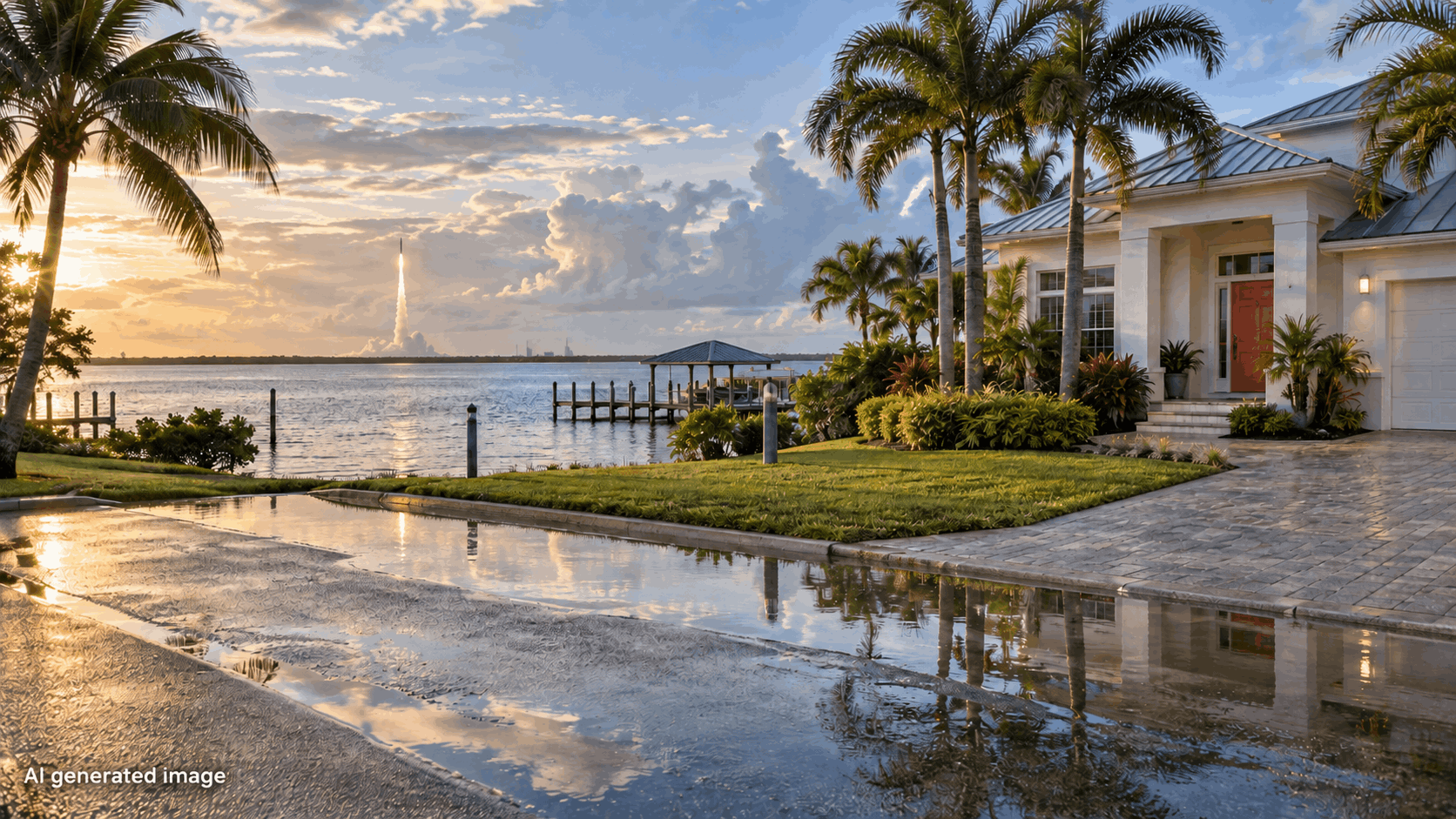
Living on the Space Coast means water is never far away — the Indian River Lagoon, the Banana River, canals winding through neighborhoods from Titusville to Palm Bay, and the Atlantic itself just minutes to the east. That proximity to water is a huge part of why people choose to live here, and it's not something residents take for granted. It's Tuesday afternoon dolphin sightings from the causeway. It's watching a rocket lift off over the river at dusk. It's the reason people come and the reason they stay.
It's also why understanding flood insurance isn't optional if you own — or plan to own — a home in Brevard County.
Here's something a lot of buyers don't realize until they're already under contract: flood insurance is not part of your standard homeowners insurance policy. It's a completely separate policy, purchased separately, from a separate company, and in many parts of the Space Coast your lender will require it as a condition of your loan. Even when it isn't required, choosing to skip it can be one of the most expensive decisions a homeowner ever makes. Florida sees more flood insurance claims than almost any other state, and Brevard County is not immune to the kind of rainfall events, tropical systems, and storm surge that turn "my house has never flooded" into a very different sentence.
NFIP vs. Private Flood Insurance: You Have Options

Most people are familiar with the National Flood Insurance Program — NFIP — which is administered by FEMA and is what lenders typically accept when they require flood coverage. An NFIP policy covers up to $250,000 for your home's structure and up to $100,000 for your personal contents. You can purchase building coverage, contents coverage, or both, and both are worth having.
What NFIP doesn't cover is worth knowing just as clearly. It won't pay for additional living expenses if you're displaced from your home after a flood. It generally won't cover damage from sewer backup unless you add a separate rider. It won't cover your landscaping, your swimming pool, or your car. And if your home is worth more than $250,000 to rebuild — which describes a significant portion of Space Coast homes — the NFIP alone won't make you whole.
That's where private flood insurance comes in. The private market in Florida has grown substantially over the past several years, and it's now a real alternative worth exploring. Private policies can offer higher coverage limits, broader definitions of what qualifies as flood damage, shorter waiting periods before coverage kicks in, and in some cases, lower premiums than NFIP — particularly for properties that have seen sharp rate increases under FEMA's newer pricing model. Getting quotes from both the NFIP and the private market before purchasing coverage is simply smart shopping.
Flood Zones on the Space Coast: What the Letters Mean
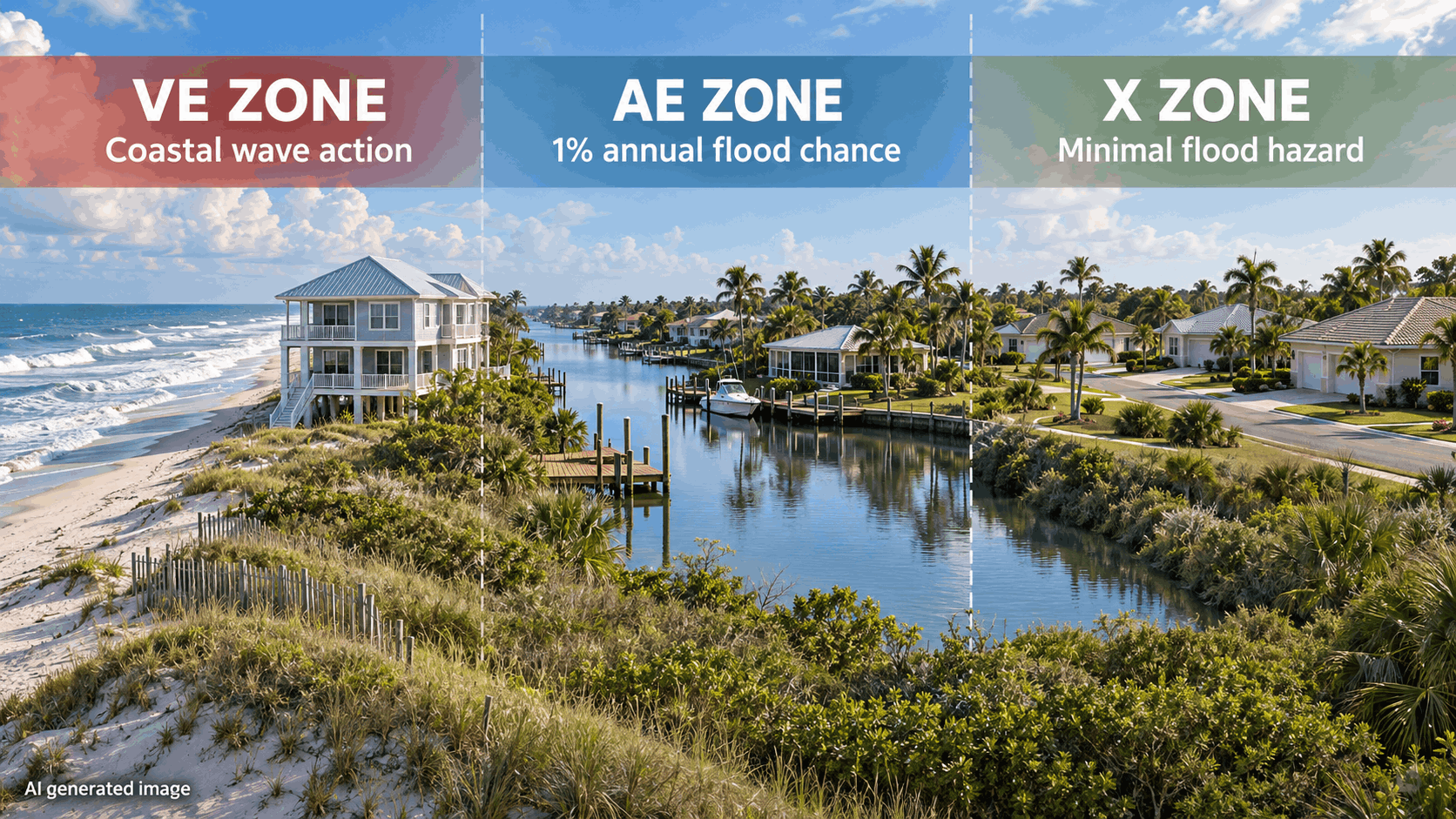
FEMA assigns flood zone designations to every property in the country based on assessed risk, and those designations have real consequences for what you'll pay and whether coverage is required.
AE Zones are within the 100-year floodplain — meaning FEMA estimates there's a 1% chance of flooding in any given year. That sounds small, but over a 30-year mortgage, the odds compound considerably. AE zones are the most common Special Flood Hazard Area (SFHA) designation you'll encounter on the Space Coast, particularly in Merritt Island, Cape Canaveral, and areas with canal frontage. If your home is in an AE zone and your mortgage is backed by the federal government (FHA, VA, USDA, Fannie Mae, Freddie Mac), flood insurance isn't optional — it's legally required as a condition of your loan.
VE Zones are the most serious designation. They're the coastal high-hazard areas where storm surge combines with wave action, which adds a different level of structural risk on top of flooding. Oceanfront and near-oceanfront properties in Cocoa Beach, Cape Canaveral, and parts of the barrier island can fall in this zone. VE zone insurance is typically the most expensive, which is a factor worth understanding before purchasing in those areas.
X Zones indicate minimal flood hazard — they're outside the 100-year floodplain. Many inland properties in Rockledge, Viera, interior Palm Bay, and parts of Melbourne fall here. Flood insurance usually isn't required in X zones, but it's worth noting: roughly 20% of all flood claims nationwide come from outside designated high-risk areas. Heavy rainfall events that overwhelm drainage systems don't respect map designations. Flood insurance in an X zone is genuinely optional, but it's also genuinely cheap relative to what it covers — typically a few hundred dollars a year.
If you want to look up any address, FEMA's Flood Map Service Center at msc.fema.gov is free and takes about two minutes. It'll tell you exactly what zone a property is in, which is a useful thing to know before you're emotionally committed to a house.
What's Changed: Risk Rating 2.0
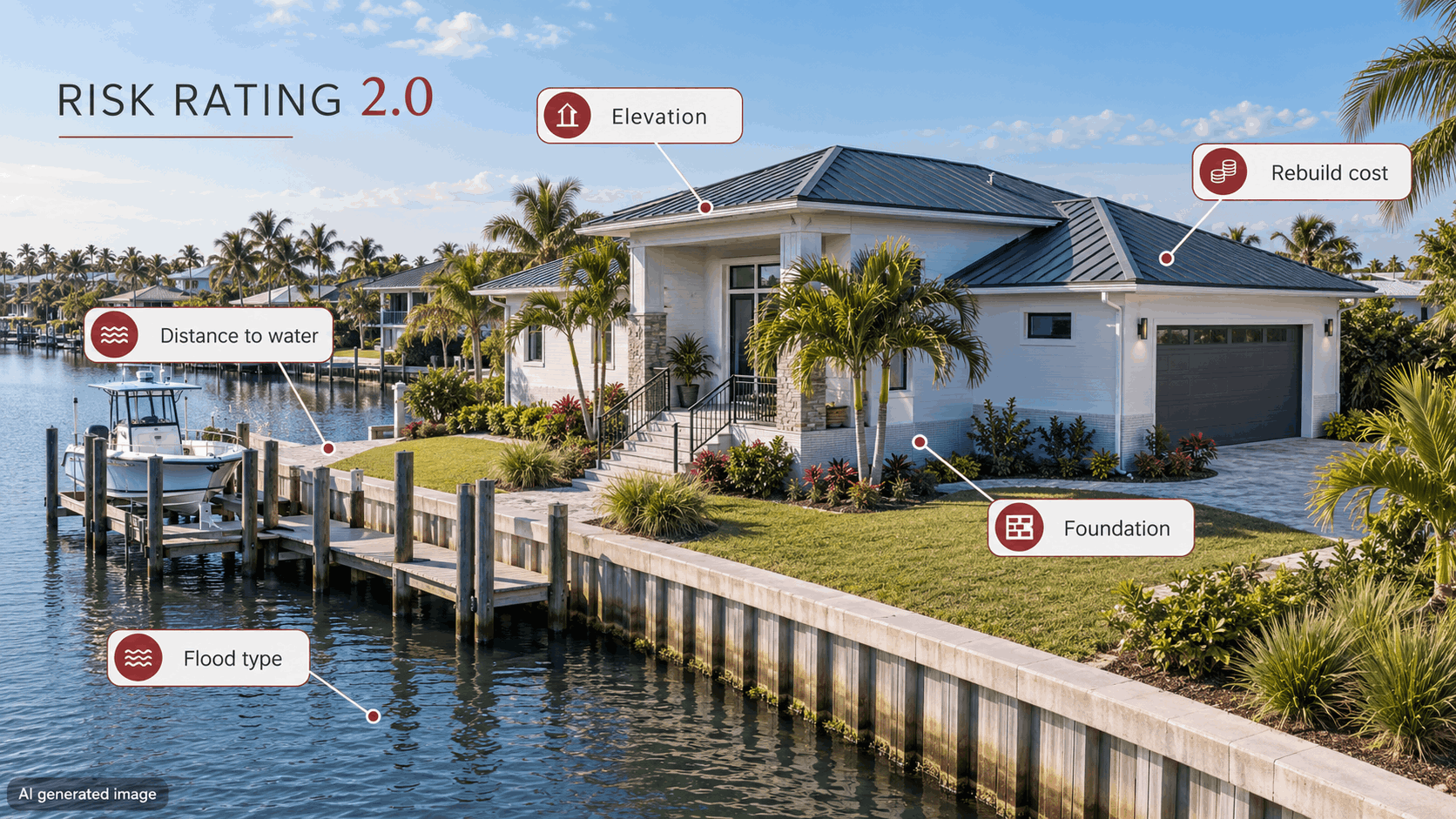
In October 2021, FEMA implemented a significant overhaul of how NFIP premiums are calculated, called Risk Rating 2.0. Before that change, your premium was calculated primarily based on flood zone and the year your home was built. Risk Rating 2.0 replaced that with individual property-level assessment — looking at your home's specific elevation, its proximity to water, the type of flooding it's most likely to experience, the cost to rebuild, and your foundation type.
For some homeowners, particularly those who had been overcharged relative to their actual risk under the old system, Risk Rating 2.0 brought lower premiums. For others — especially owners of waterfront homes, canal homes, and lower-elevation properties that had been subsidized under the old model — premiums increased, sometimes substantially. If you're buying a property and the current owner has an existing flood insurance policy, ask what the current annual premium is, because it may not reflect what you'll pay going forward. Rates are phased in gradually, but the trajectory matters.
The Elevation Certificate: Your Best Tool for Managing Cost
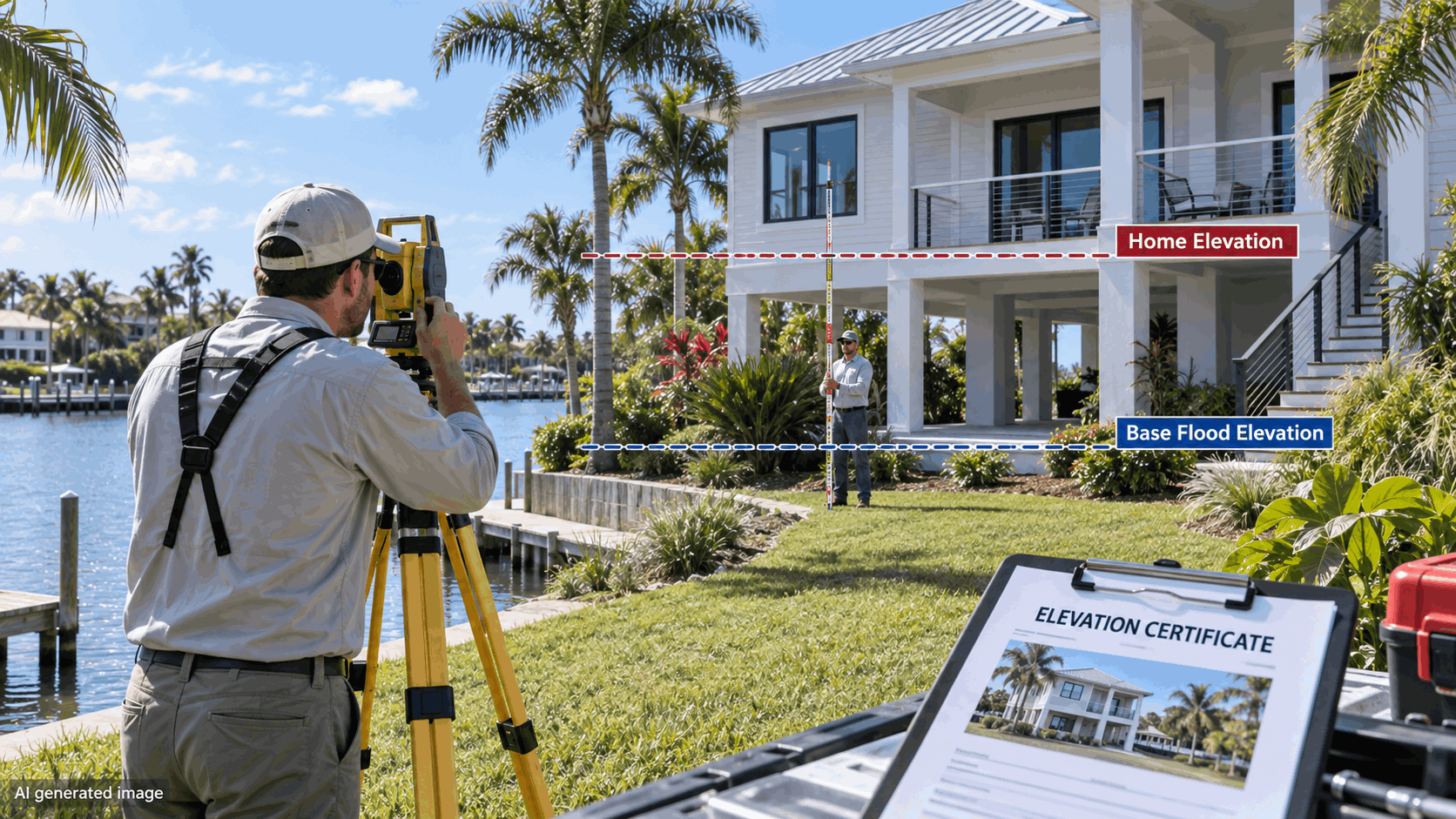
An Elevation Certificate is a formal survey document, prepared by a licensed surveyor or engineer, that records your home's elevation in relation to the base flood elevation for your area. It's one of the most powerful tools available for managing your flood insurance premium, because if your home sits above the base flood elevation, that fact — documented officially — can mean the difference between a $1,500 annual premium and a $4,000 one.
Many homes already have an elevation certificate on file, particularly those that were built or sold after the 1980s when lenders started requiring them more consistently. If you're buying a home, ask whether an elevation certificate exists. If it does, ask for a copy. If it doesn't exist, getting one prepared is often worth the cost many times over in the form of reduced premiums.
The 30-Day Waiting Period
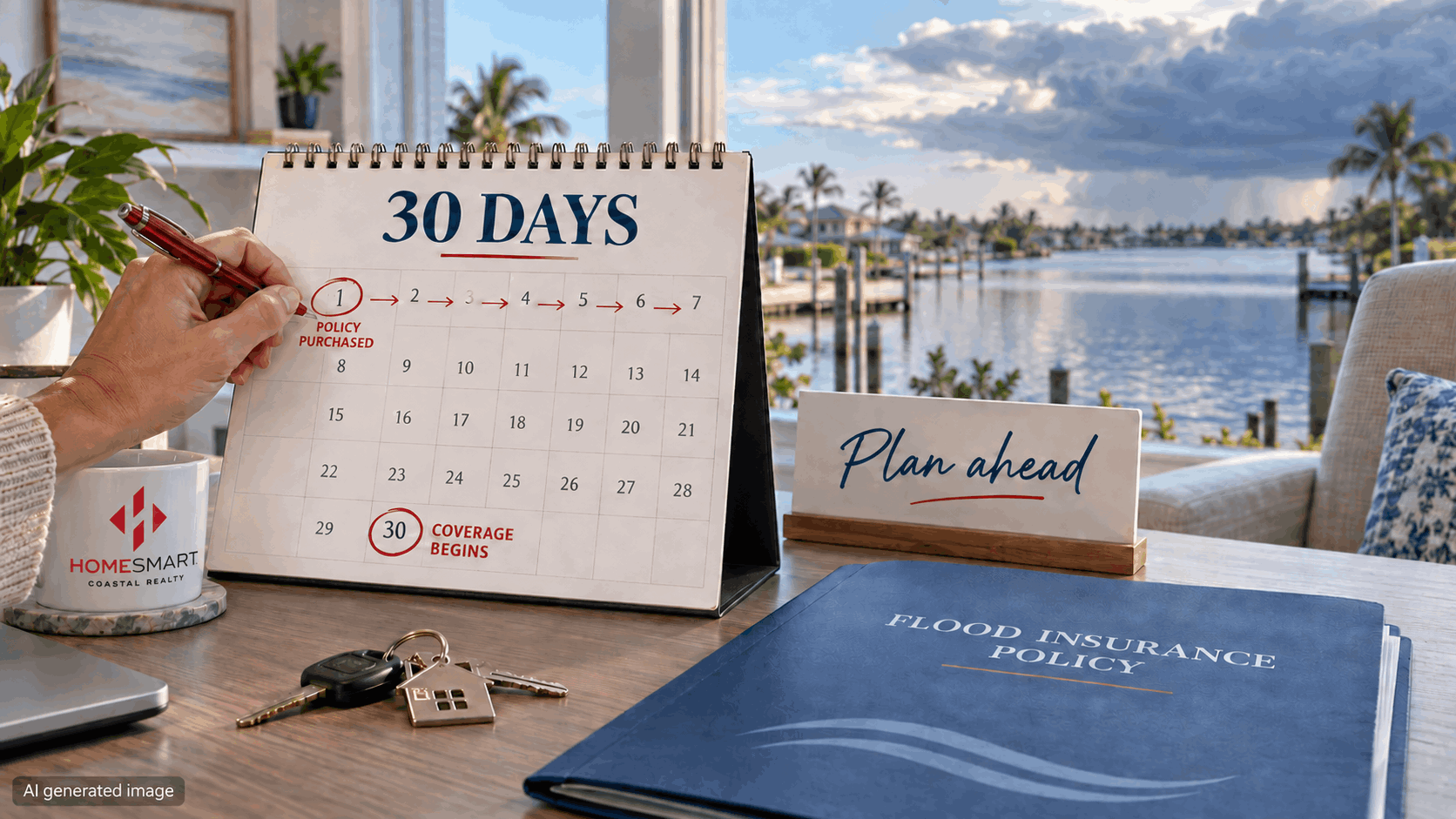
This one surprises people more than it should. When you purchase a new NFIP flood insurance policy, there's typically a 30-day waiting period before the coverage takes effect — with limited exceptions. The main exception is when coverage is purchased in connection with a loan closing, where the waiting period is waived. Outside of that, you can't purchase a policy when a tropical system is forming in the Gulf and expect to be covered by the time it makes landfall. Planning ahead is the only way around this. Private flood policies sometimes have shorter waiting periods, which is another reason to shop both markets.
What Buyers Should Know Before Closing

If you're in the process of buying on the Space Coast, these are the questions worth asking before you're sitting at the closing table:
Does the home currently have flood insurance, and what is the premium? This tells you what the cost has been and gives you a baseline — though your rates may differ as a new buyer.
Is there an elevation certificate on file? If yes, request a copy. If no, factor in the potential cost of obtaining one.
Has the property ever flooded, or does it have a history of flood insurance claims? A property with repetitive flood loss claims has a specific FEMA designation that can affect both what you pay for insurance and how easily you can sell it later. Your agent can help you research this.
What flood zone is the property in? Your lender will order a flood zone determination as part of the closing process, but knowing early gives you time to research insurance costs before you've already committed.
Flood insurance isn't the most exciting part of buying a home — I'll grant you that. But it's one of the parts that matters most, particularly on the Space Coast where the water we love is also the water that can surprise us. I walk every buyer I work with through these questions before we get to the closing table, because finding out that a property's flood insurance costs $4,800 a year is a very different conversation when you still have the option to renegotiate or walk away than when you're signing.
If you're buying, selling, or already own a home in Brevard County and you have questions about flood insurance, flood zones, or how this affects a specific property you're looking at, reach out. This is exactly the kind of thing I'm here to help you understand.
Vanessa Roquevert
REALTOR® | HomeSmart Coastal Realty
Your Space Coast Area Specialist
321-323-6145 | peacefly3@yahoo.com