

Living Near Rocket Launches on the Space Coast: An Honest Guide for Families Considering a Move
Living Near Rocket Launches on the Space Coast: An Honest Guide for Families Considering a Move
Here's the thing about that question — it's the right one to ask, and most of what's written about living near the launch pads isn't going to answer it. What's out there tends to be written by people who love space, who find the whole thing magical, who can't imagine why anyone would frame it as something to weigh carefully. That content is useless to a family trying to decide whether to buy a house here.
So I want to give you the version I give clients who ask me directly: what it's actually like, what stays interesting, what becomes background noise, and what nobody warned them about before they moved.
I've lived and worked on the Space Coast since 1976. I've sold homes within clear sight of the pads and homes far enough away that a launch is just a faint rumble at the edge of your awareness. Here's what I actually know.
The frequency has changed — significantly
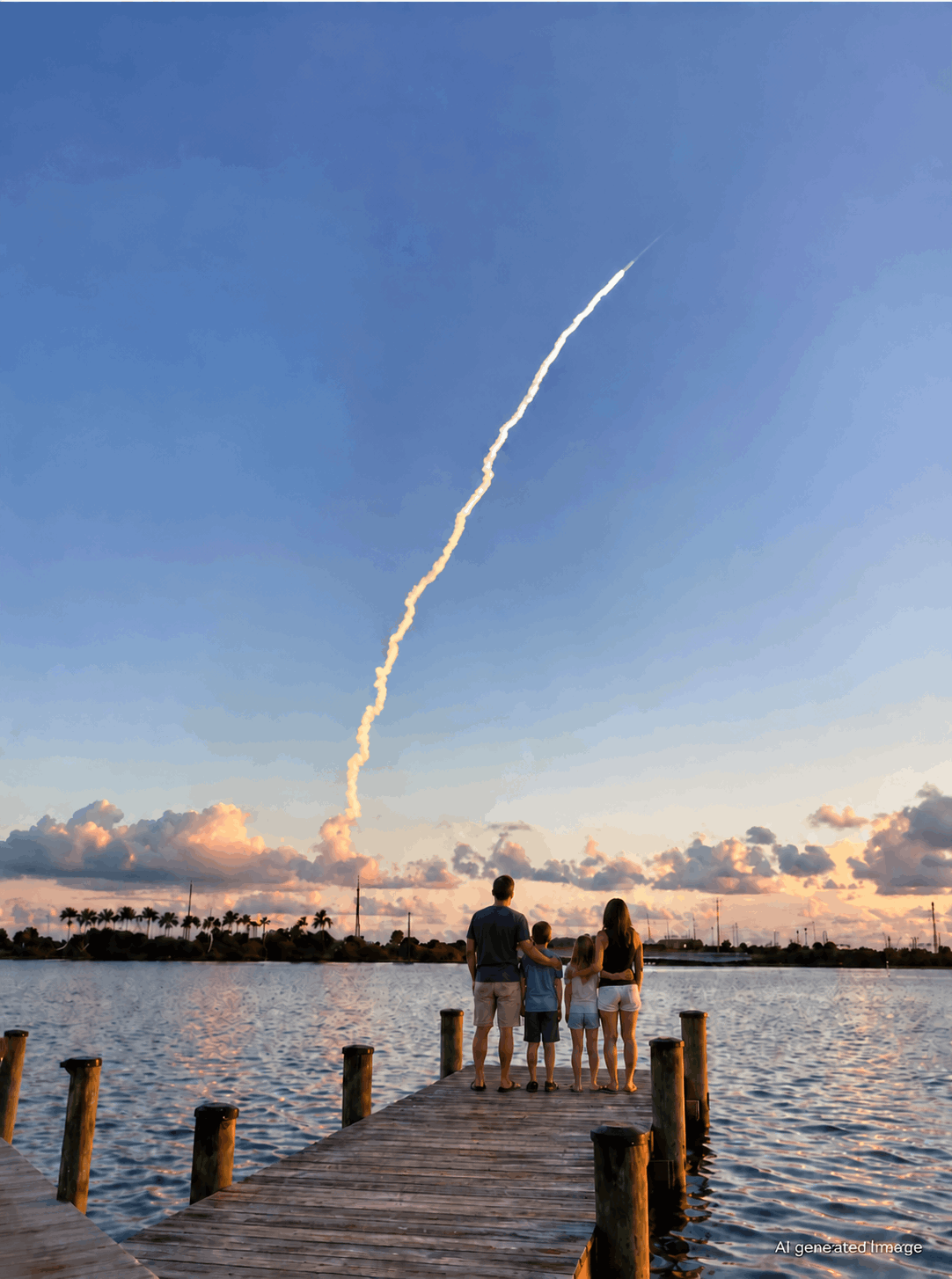
If you're researching this move, you may have grown up thinking of rocket launches as rare and significant national events. That's not the Space Coast anymore. SpaceX operates from LC-39A and SLC-40 at Cape Canaveral and launches Falcon 9 rockets at a pace this county has never experienced — active months can see multiple launches in a single week. Blue Origin is building out operations at LC-36. NASA missions continue on their own cadence. In busy stretches, a week without a launch is more unusual than a week with one.
This changes the question you need to be asking. It's not "will we see a rocket launch?" It's "what does it feel like to live somewhere where rocket launches are a regular occurrence?" Those are different questions with genuinely different answers.
What it sounds and feels like — by location
Your distance from the launch pads determines your experience more than anything else. Let me be specific about that, because the Space Coast stretches roughly 72 miles and "close to the launches" means different things in different neighborhoods.
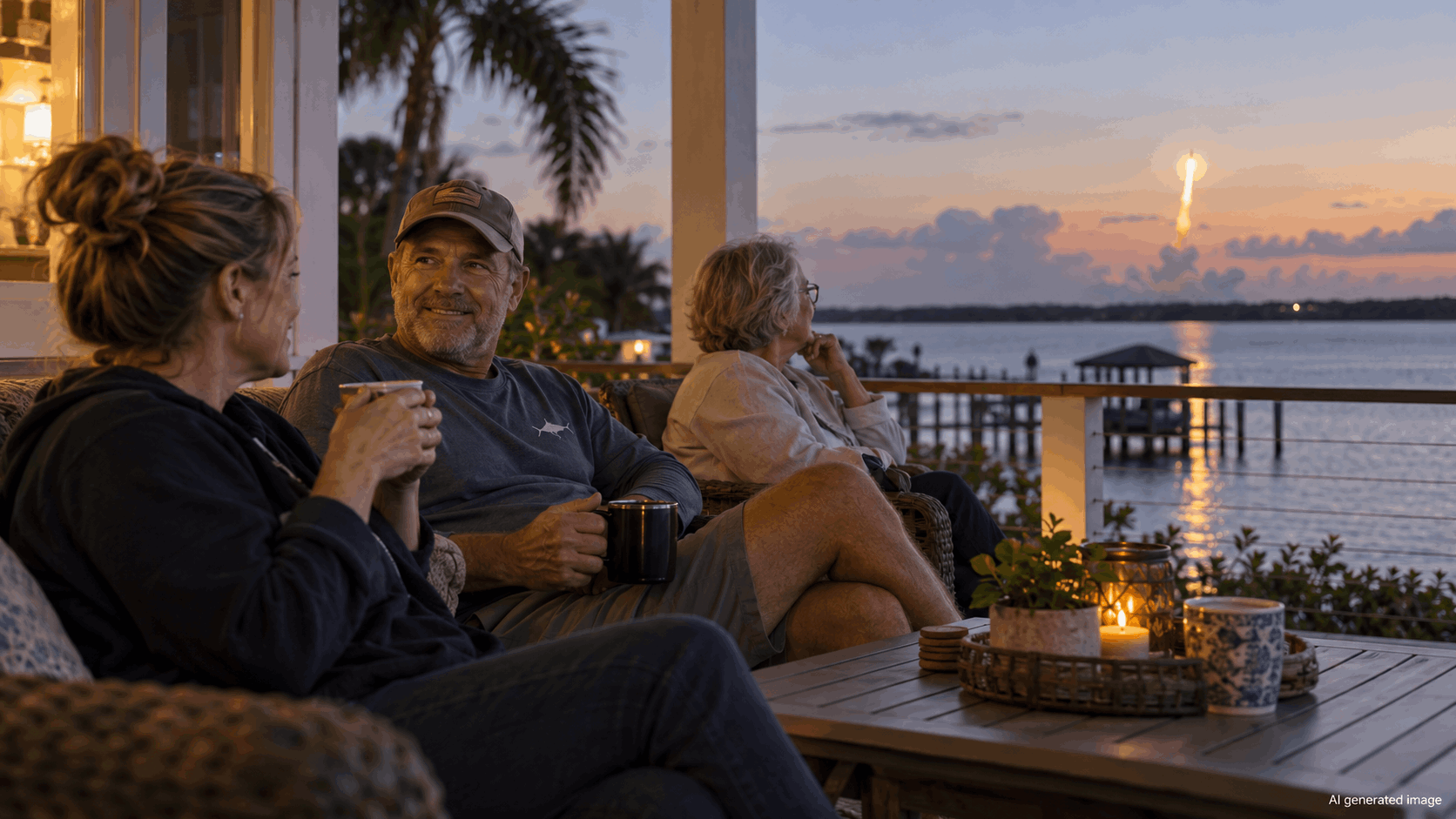
On Merritt Island — particularly on the eastern side, where many neighborhoods face the Banana River — you often have direct sight lines to the pads. During a launch, you'll hear a sustained, building rumble that starts after a delay and keeps going for thirty seconds or more. If you're standing outside, you'll feel it in your chest. Not unpleasantly, but physically. Canal-front and river-facing properties have this experience most clearly because the sound carries across the water without much to break it up. Kids, at least at first, will absolutely lose their minds in the best possible way.
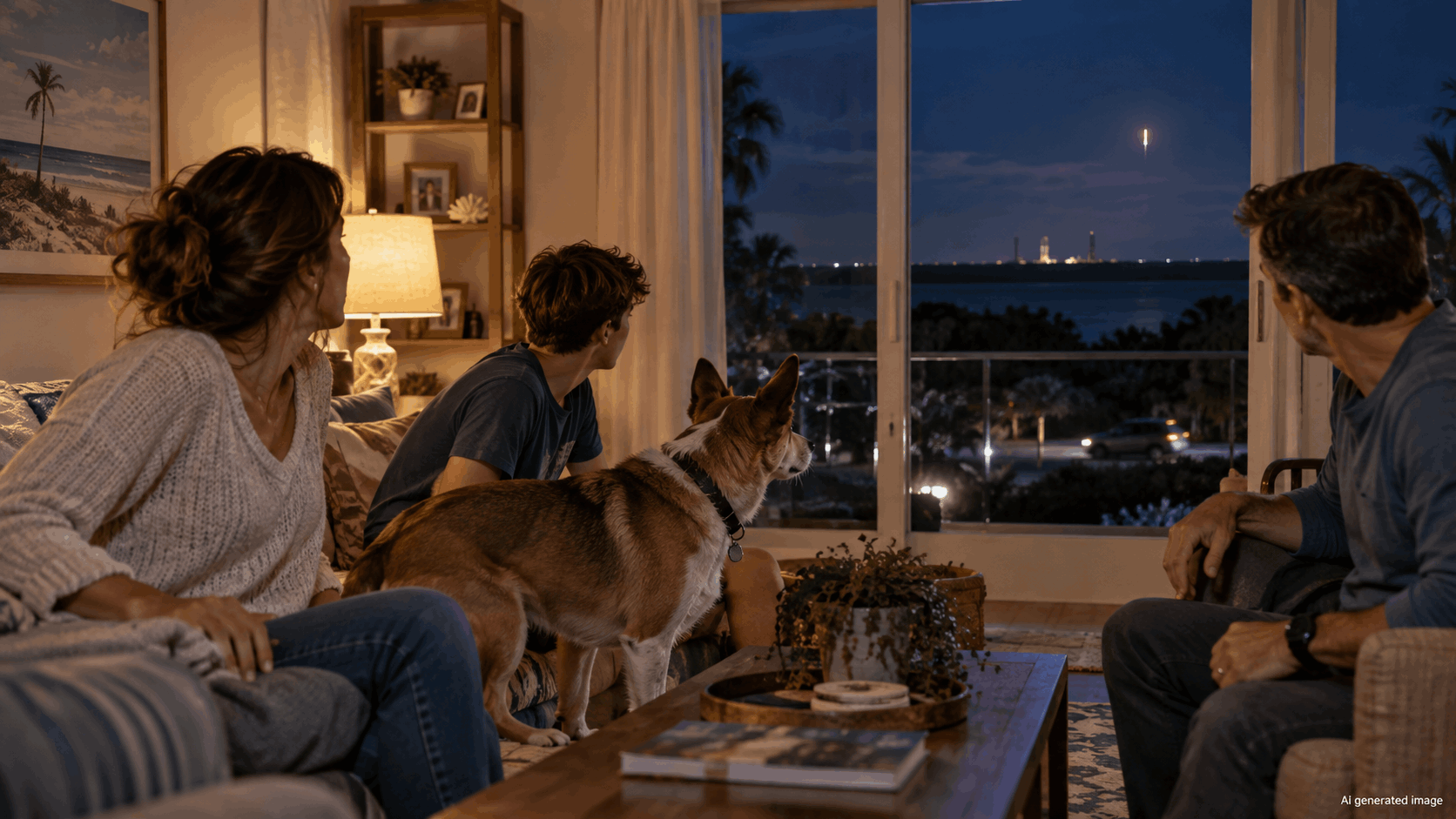
Rockledge and Viera are on the mainland, west of the river, at a distance where the experience softens considerably. On a clear day you can watch a launch easily — these are large rockets, and they're not subtle — and you'll generally hear a rumble, though it arrives softer and later. The physical sensation is minimal. For most families in these communities, a launch is something you step outside to catch when you notice it happening, not something that interrupts what you were doing.
The closer you get to Cape Canaveral and Port Canaveral, the more dramatic it gets. In Cocoa Beach and Cape Canaveral proper, windows can vibrate during powerful launches. Your car alarm might go off if you're parked in an open lot. It's palpable. Whether that's a feature or a nuisance depends entirely on your household — and honestly, both answers are reasonable.
The thing nobody warned you about: the sonic booms
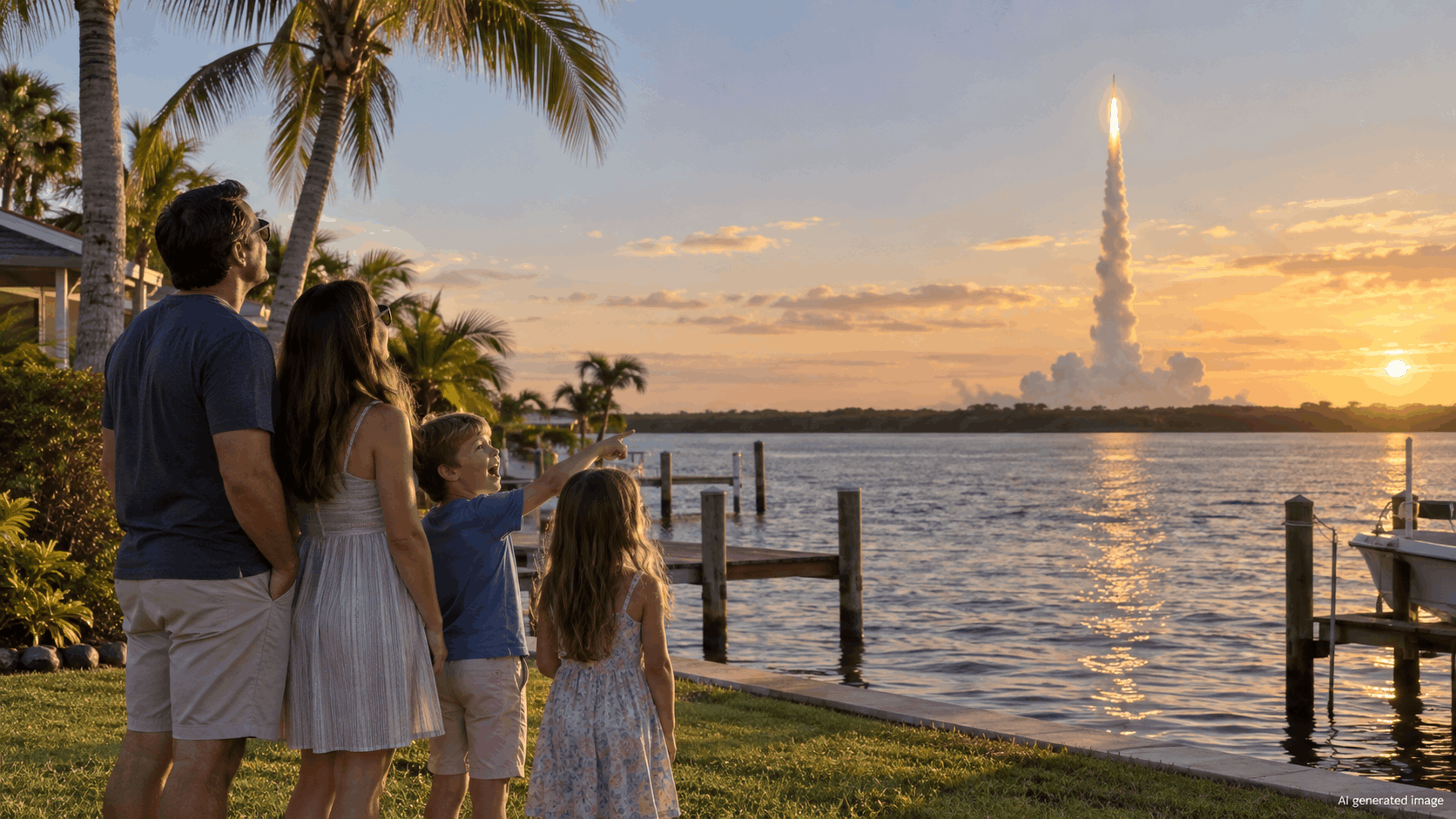
If you take nothing else from this article, take this. The sonic booms from SpaceX booster landings will catch you off guard, even when you know they're coming. Every time.
When a Falcon 9 first-stage booster returns to Earth and lands at Cape Canaveral, it breaks the sound barrier during its descent, producing a double sonic boom. The sound typically arrives about eight to ten minutes after launch and is very different from the low rumble of liftoff. It’s a sharp, concussive BOOM-BOOM—almost like a cannon firing twice in quick succession.
Because not every launch includes a booster landing at Cape Canaveral, the sound can catch you off guard. You may barely notice the launch itself, only to be startled several minutes later by two sudden, powerful booms.
This is the part of Space Coast life that stays strange longest. The launches themselves become something you appreciate — you learn to read the trajectory, you develop preferences about viewing angles, it becomes a thing your family does together. But the sonic booms remain a thing that catches you mid-sentence, every single time, no matter how many you've experienced. Plan your expectations accordingly, especially if you have young children who are light sleepers.
Road closures and traffic — the honest version
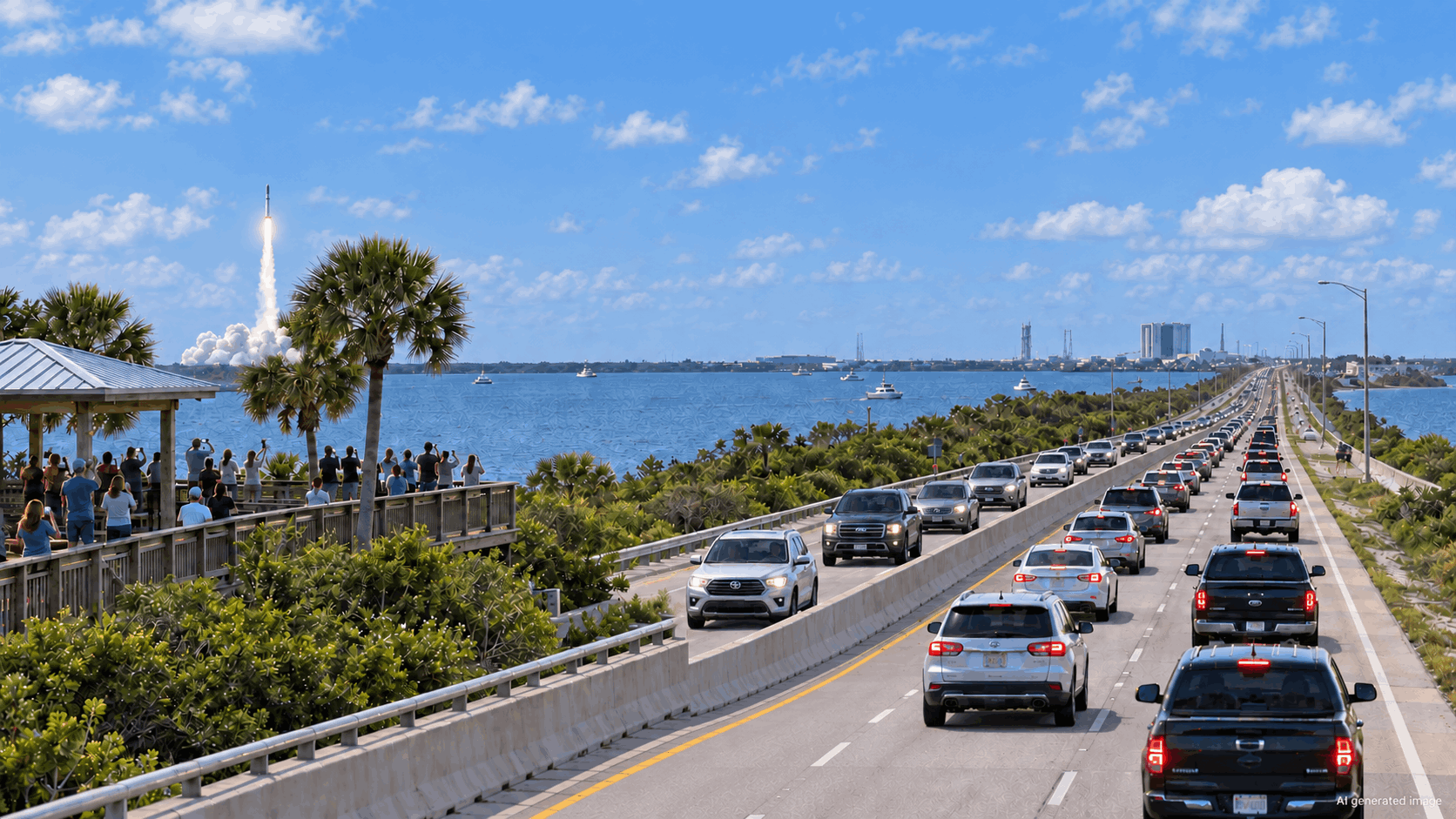
For major launches — crewed missions, high-profile commercial flights — the causeways fill up. People drive to SR 528, SR 520, and the A1A corridor to watch from the water's edge, and traffic on those roads can back up significantly. If you live on Merritt Island and need to cross a causeway on a day when a big launch is scheduled, that's a real consideration worth building into your day.
For the more routine Falcon 9 commercial launches, which are the majority of what happens, the traffic impact is minimal and road closures are extremely rare. Most residents don't rearrange their schedules around them. It's the marquee events — the ones that get national coverage — where you'll notice the roads.
What residents actually say, after years of this
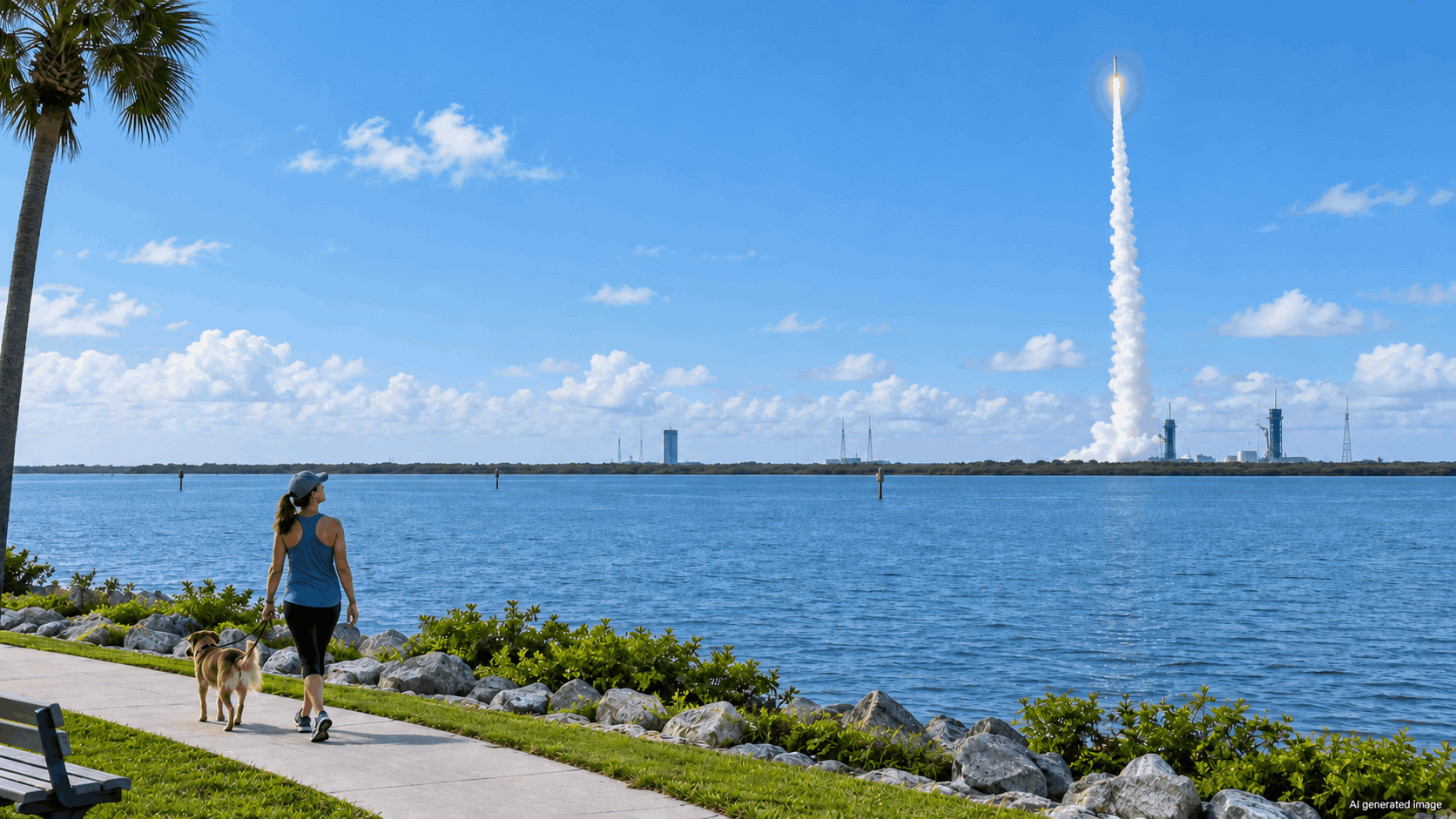
I've had this conversation with a lot of people who've been here for a decade or more, and the honest consensus is that the launches don't wear on you in the way you might fear before you move. What happens instead is that they become part of the rhythm of living here, the way the fog is part of life in certain coastal cities or traffic is just part of commuting in a metro area. You adapt to it, and after a while you don't think of it as something you adapted to.
What's more interesting is the flip side. People who've been here long enough to be fully habituated will watch a major launch — really watch it, not just glance up — and still feel something about it. "I've seen hundreds of these and it still does something to me" is a version of what I hear regularly. The novelty fades. The scale doesn't. You're watching something human-built leave the atmosphere. That doesn't get small.
The thing people consistently say they underestimated? The sonic booms. It's always the sonic booms.
What this means for choosing where you buy
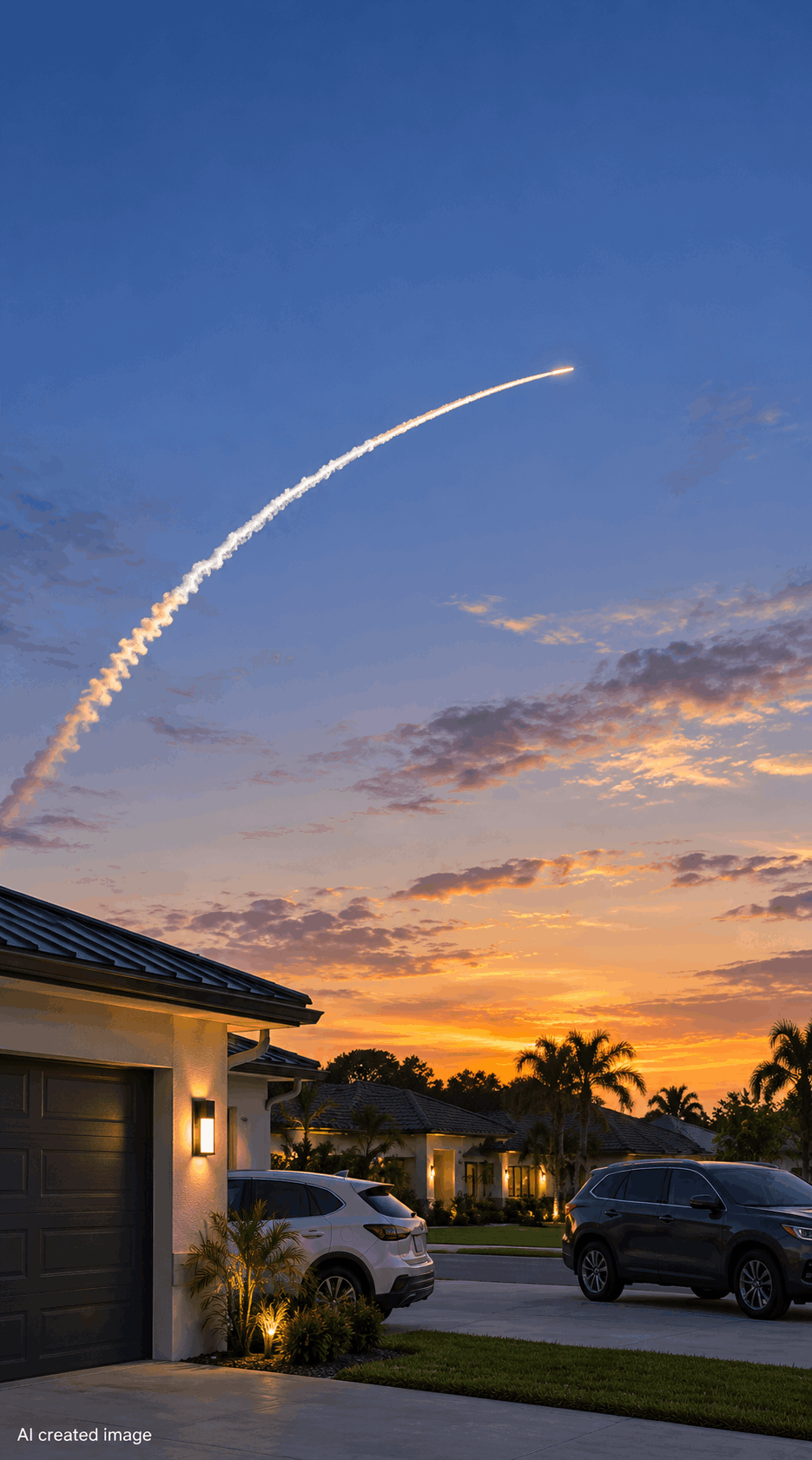
If proximity matters to you — if you want launches visible from your yard, if you want to feel the sound in a physical way — the eastern side of Merritt Island and canal-front neighborhoods give you that experience clearly. You're close enough that it's immersive, and on a clear launch night, there's genuinely nothing quite like it.
If you want to see launches without the intensity, Rockledge and Viera put you at a distance where they're pleasant rather than disruptive. You'll still watch them. You'll still hear them. The experience is softer, which is the right word for it — not less, just softer.
And if launches aren't a major factor in your decision — and there are plenty of families who move here and think of them mostly as a nice backdrop to a good life — the rest of the county offers strong options across every other priority: school zones, commute patterns, flood zone exposure, price, neighborhood character. The launches are one variable. They're not the only one.
Nobody I've ever worked with has called me from the Space Coast to say they wished they'd picked somewhere less interesting. What they do want — before they move, not after — is to understand what they're choosing. I'd rather you have the full picture now than be surprised by your first sonic boom at 11 PM on a Tuesday.
If you want to talk through where different neighborhoods actually sit relative to the pads, what the commute looks like, how the schools shake out, or what flood zone exposure looks like in the areas you're considering — that's a conversation I'm always glad to have.
Categories