
Why Your Florida AC Needs Vinegar Every Month (And What Happens If You Skip It)
Why Florida AC Drain Lines Need Regular Cleaning
(And How Vinegar Can Help Prevent Clogs)
Space Coast Living · 7-minute read · September 2026
Why Florida AC Drain Lines Clog So Easily
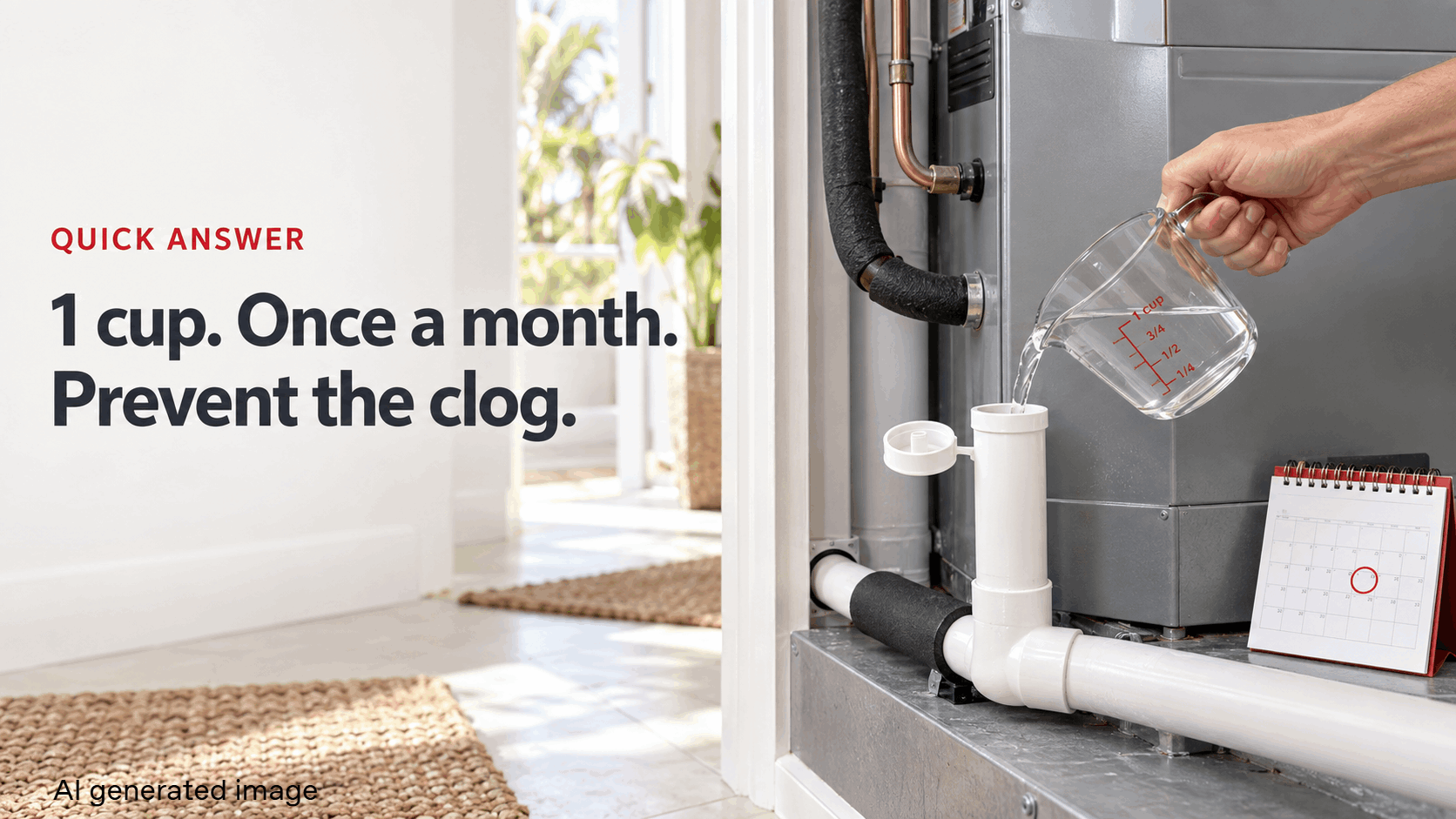
Every time your air conditioner cools your home, it removes moisture from the indoor air. That moisture collects near the indoor unit and travels outside through a condensate drain line—usually a small PVC pipe.
On the Space Coast, our heat and humidity keep AC systems working for much of the year. Moisture can combine with dust and other airborne debris to create buildup inside the line. If that buildup becomes a blockage, water can back up near the air handler, damage nearby ceilings or flooring, or trigger a safety switch that shuts down the system.
This is one of those Florida home-maintenance details that many homeowners don't learn about until they experience a backup, unexpected shutdown, or service call.
The Simple Preventive Step: Distilled White Vinegar
If your HVAC manufacturer or technician approves homeowner drain-line maintenance, distilled white vinegar may help control buildup between professional service visits.
- Check the guidance for your system. Maintenance instructions can differ depending on the equipment and drain-line configuration.
- Turn off the air conditioner. Water and electrical equipment are a dangerous combination, so the system should be powered off before accessing the drain line.
- Locate the correct indoor access point. It's generally near the indoor air handler. Don't pour anything into a pipe unless you're certain it's the condensate-line access point.
- Pour in one cup of distilled white vinegar. Follow your manufacturer’s instructions or the directions provided by your HVAC technician.
- Follow the recommended waiting or flushing procedure. Some systems may require the vinegar to sit before the line is flushed or the equipment is restarted.
Vinegar is primarily a preventive maintenance measure. It shouldn't be treated as a guaranteed way to clear a drain line that's already completely blocked.
What You Should See
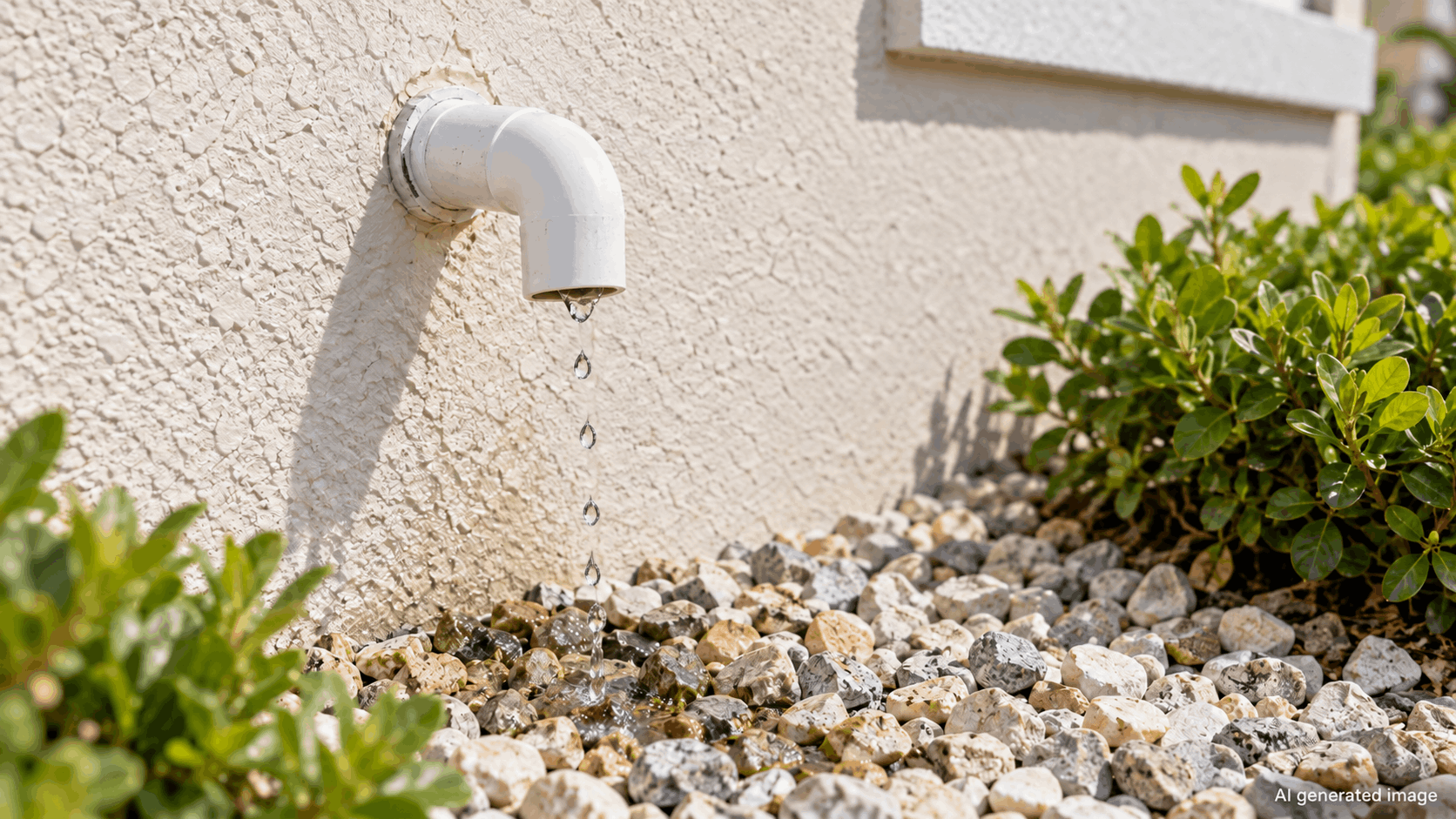
If the exterior drain outlet is accessible, you may be able to confirm that liquid is moving through the line. Once the air conditioner is operating and producing condensation, water should drain away from the indoor unit.
Gurgling or bubbling by itself doesn't prove that a blockage has been removed. If the system is operating but you see no drainage—or you notice pooling water, leaking, or repeated shutdowns—contact an HVAC professional. A lack of drainage can indicate a clog, but it can also result from another system problem.
How Often Should You Do This?
Whatever schedule is recommended, consistency matters. Pairing the task with your filter change or another recurring home-maintenance reminder can make it easier to remember.
What Happens If You Skip It
A neglected condensate line can create several problems:
Scenario 1: A Slow Backup. Water begins collecting near the air handler. You may notice a musty odor, water around the unit, or staining on a nearby ceiling or floor. Continued moisture can contribute to additional damage.
Scenario 2: A Safety Shutdown. Many systems have a float switch designed to shut down the equipment when water rises in the drain pan. That safety feature can help limit water damage, but it may also leave you without air conditioning until the drainage problem is corrected.
Scenario 3: Professional Cleaning Becomes Necessary. Once the line is fully blocked, preventive vinegar maintenance may no longer be enough. A technician may need to use a wet/dry vacuum, water pressure, a specialized cleaner, or other professional equipment to remove the obstruction.
Regular maintenance can reduce the likelihood of these problems, although it can't prevent every clog or system failure.
Signs Your Drain Line Might Already Be Clogged
If you've never checked your condensate line, watch for these possible warning signs:
- A musty or moldy odor near the indoor unit or air vents
- Water stains or dripping near the air handler
- Rust or standing water in the drain pan
- Reduced cooling performance
- The air conditioner shutting down or refusing to turn on
These symptoms can have more than one cause, so don't assume that vinegar alone will correct the problem.
Don't rely on routine vinegar maintenance when any of the following conditions already exist:
- Water is actively backing up or pooling near the air handler.
- You see water damage, extensive rust, or visible mold.
- The system repeatedly shuts down because the safety switch is being triggered.
- You can't identify the correct condensate-line access point.
- You've attempted approved preventive maintenance, but drainage didn't improve.
These conditions may indicate an existing blockage or another HVAC problem that requires professional diagnosis and equipment.
Frequently Asked Questions About AC Drain-Line Maintenance
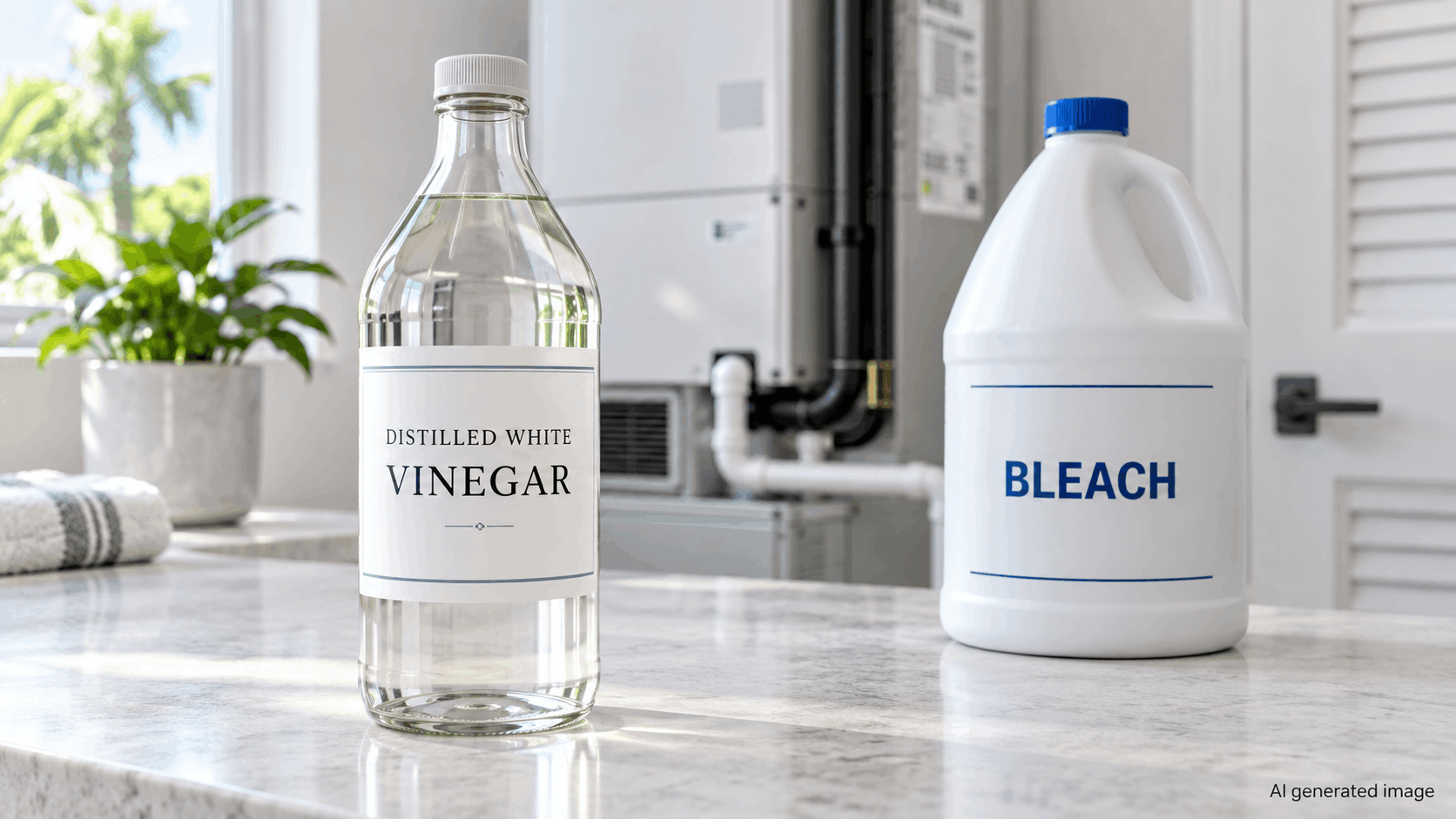
Can I use bleach instead of distilled white vinegar?
Distilled white vinegar is the better general recommendation because it's mild and is specifically included in manufacturer maintenance guidance. Some systems or technicians may permit a diluted bleach solution, but that doesn't make bleach appropriate for every system. Never use undiluted bleach, never mix bleach with vinegar or another cleaning product, and always follow the instructions for your equipment.
Where do I pour the vinegar?
After turning off the system, vinegar is generally added through the condensate-line access point near the indoor air handler—not through the exterior discharge opening. If you can't confidently identify the correct access point, ask an HVAC technician to show you rather than guessing.
What if nothing comes out of the exterior drain?
If you see no visible drainage while your air conditioner is producing condensation, it could indicate a blockage. However, it might also result from a frozen evaporator coil, a disconnected pipe, an improperly sloped drain, or another problem. If water is backing up or the system isn't operating normally, contact a professional.
Should I continue this maintenance during the cooler months?
Your schedule may change when the air conditioner runs less frequently. Follow the maintenance schedule recommended for your system rather than assuming that every home needs the same year-round routine. An annual professional HVAC inspection is also an important part of preventive maintenance.
One Small Task That Can Prevent a Big Problem
Regular drain-line maintenance can help keep a small issue from becoming an unexpected repair. Choose a recurring reminder, follow the guidance for your particular AC system, and include professional HVAC maintenance as part of caring for your Florida home.
This is a simple example of the practical knowledge that helps homeowners stay ahead of problems—especially in the heat and humidity of Florida's Space Coast.
Looking for more practical guidance about owning, buying, or selling a home on Florida's Space Coast? Visit VanessaSellsSpace.com or contact me directly.
Vanessa Roquevert
REALTOR® | HomeSmart Coastal Realty
Your Space Coast Area Specialist!
321-323-6145 | VanessaSellsSpace@gmail.com
Sources & Further Reading
The following HVAC manufacturer resources were consulted in preparing this article: